BBRI – Implementation Science Fellowship Program
Advances in medical research have transformed what is possible in the prevention and treatment of disease. Yet too often, new knowledge does not reach the communities that need it most. According to the U.S. National Institutes of Health, it can take many years for evidence-based findings to become part of routine clinical and community practice. For underserved and historically marginalized populations, the delay can be even longer.
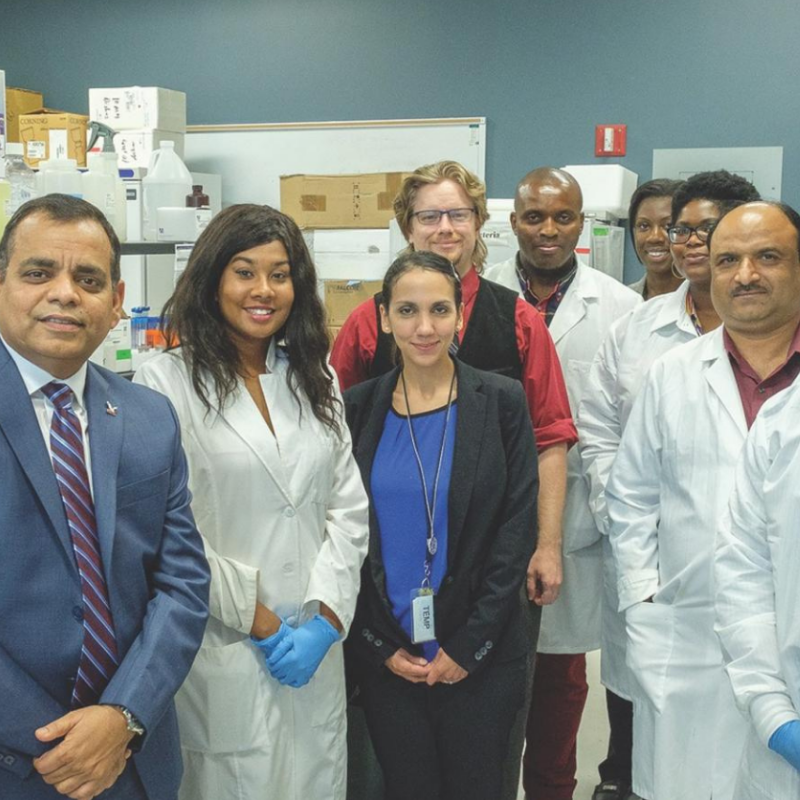
To help close this gap, the Julius L. Chambers Biomedical Biotechnology Research Institute (BBRI) at North Carolina Central University (NCCU) leads a multidisciplinary effort focused on health issues that disproportionately affect minority and underserved communities. Through its Implementation Science Education and Training (ISET) program, supported by the Elsevier Foundation, NCCU is strengthening the capacity of researchers to translate evidence into action—ensuring that high-quality research leads to meaningful, equitable health improvements.
What do we do
The partnership supports the Implementation Science Education and Training (ISET) program at NCCU, which is designed to embed implementation science within health disparities research and academic training.
The program focuses on equipping early-career researchers, faculty and students with the practical tools, mentorship and collaborative networks needed to move from discovery to delivery. By strengthening skills in implementation science, the initiative helps ensure that evidence-based interventions are not only developed, but effectively adopted in clinical and community environments serving under-resourced populations. In parallel, the program works to cultivate a sustained culture of implementation science across the university, integrating it into coursework, research design and institutional strategy so that translating evidence into practice becomes standard practice.
How do we deliver
This work is delivered through fellowship support, curriculum development and collaboration across research and community settings.
- A dedicated implementation science fellowship provides mentoring and practical experience for emerging investigators, helping them design pilot projects and strengthen their ability to secure implementation-focused funding. At the same time, new course modules introduce implementation science frameworks to students across disciplines, embedding this approach within the university’s academic culture.
- Workshops, symposia and community advisory engagement ensure that research remains grounded in real-world needs and that evidence is translated into practice in ways that are equitable, relevant and sustainable.
