Five lessons from implementing Essential Emergency and Critical Care in Tanzania
How do you turn evidence into changes in everyday patient care? The EECC team, winners of the inaugural Lancet-Elsevier Foundation Evidence to Impact Award, share what they have learned.
This article was drafted by the EECC team for the Elsevier Foundation website.
Essential Emergency and Critical Care (EECC) is a package of simple, low-cost, life-saving care that should be available to every critically ill patient, in every part of a hospital. In Tanzania, the winners of the inaugural Lancet–Elsevier Foundation Evidence to Impact Award have spent years putting it into practice.
Recent implementation across 79 hospitals increased the provision of EECC and was associated with a 31% reduction in inpatient mortality. But getting there has involved much more than introducing a clinical intervention. Here are five lessons the team has learned about putting evidence into practice.
1. Work with government from the beginning
Large-scale change cannot happen in parallel with the health system. In Tanzania, early and continuous engagement with government helped build understanding of EECC, maintain its visibility among competing priorities and ultimately integrate it into national policy. This was not a one-off exercise in securing endorsement. It meant sustained collaboration with policymakers and health leaders throughout the process.
2. Use evidence to drive change
Research helped demonstrate gaps in the care of critically ill patients and show policymakers why change was needed. Evidence on costs and cost-effectiveness helped make the case that EECC was feasible as well as necessary. But generating evidence is not enough. It needs to reach the people who can act on it, and new evidence needs to be generated as implementation progresses.
3. Don’t assume people understand the intervention
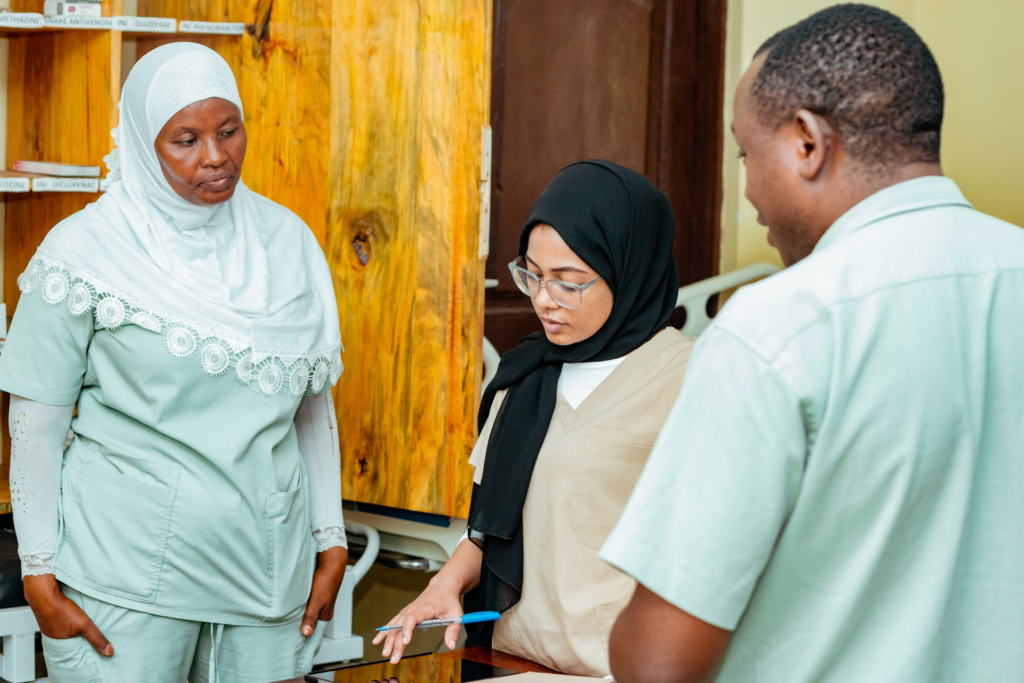
One of the barriers the team encountered was that EECC could be both underestimated and misunderstood. Some people assumed this basic care was already being provided. Others associated critical care with intensive care units and specialist staff. Neither assumption reflected what was happening in practice. Clear, repeated communication about what EECC is, who needs it and where it should be delivered has been an important part of implementation.
4. Work with the health system, not around it
EECC was not introduced as another standalone programme. The team looked for opportunities to strengthen and complement existing priorities, from maternal and paediatric care to emergency care, oxygen systems and critical care. For sustainable scale-up, the same principle means integrating EECC into clinical guidelines, education, routine hospital processes and national health information systems.
5. Training alone doesn’t change a health system
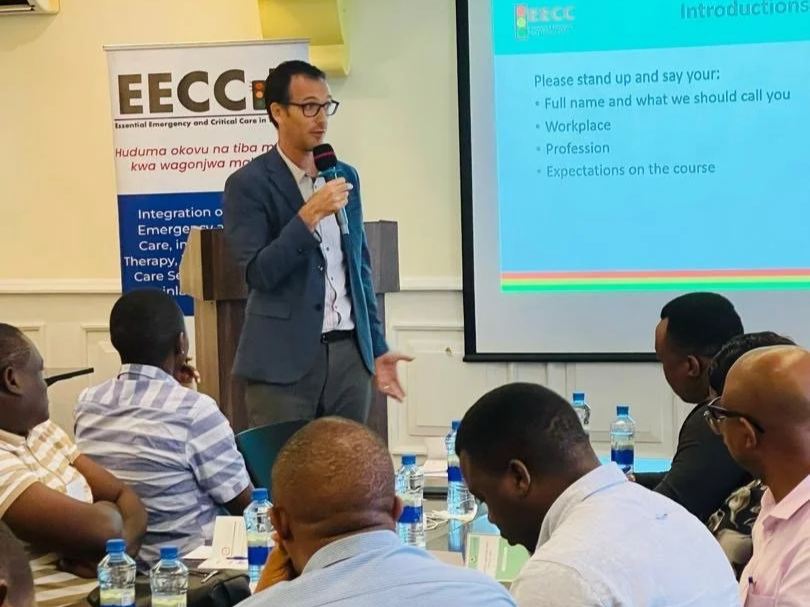
Training matters, but training by itself is unlikely to create sustained change. Implementation in Tanzania has combined training with leadership development, practical tools, focal persons, mentorship, resource readiness, measurement and engagement at multiple levels of the health system. The process has also had to adapt as the team learned what worked in different settings. The lesson is simple: changing care requires changing the system that delivers it.
None of this happened overnight. Implementation has required evidence, advocacy, collaboration and persistence. But the experience in Tanzania suggests that simple, evidence-based care can be implemented at scale, and that strengthening the basics of hospital care can make a substantial difference to patient outcomes.
Join the Evidence to Impact webinar on 18 November
Hear from the winners: join The Lancet and the Elsevier Foundation on 18 November 2026, 9:00 to 10:30 GMT, when the three winning teams of the inaugural Evidence to Impact Awards share their work.
