Global Health Corps – Emerging Leaders for Climate & Health
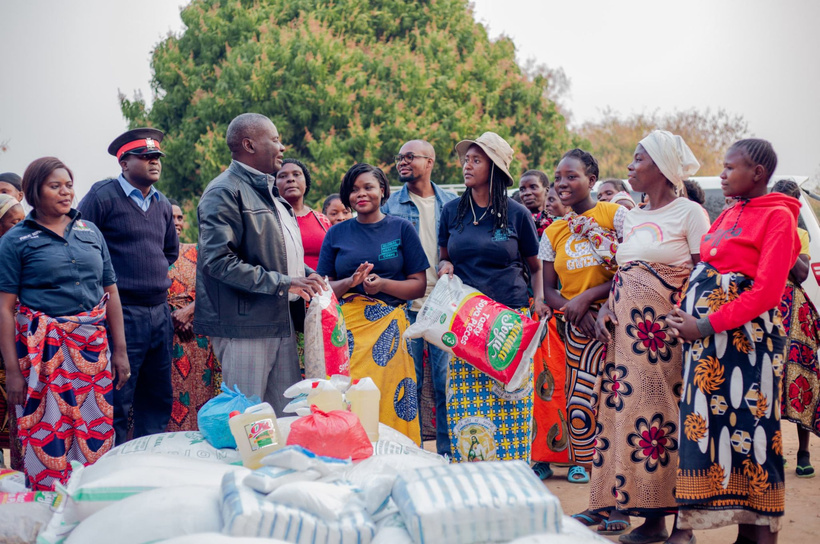
Across Sub-Saharan Africa, climate change is intensifying existing health inequities. Rising temperatures, shifting disease patterns, food insecurity, and climate-related displacement are placing additional strain on health systems that are already under pressure. Young professionals are often at the forefront of responding to these challenges, yet too few have access to sustained leadership development, cross-border networks, and platforms to shape policy and practice.
Through our partnership with Global Health Corps (GHC), the Elsevier Foundation is supporting the launch of Emerging Leaders for Climate & Health, a dedicated sub-cohort within GHC’s Africa Leadership Accelerator. The initiative invests in a new generation of African leaders equipped to strengthen climate-resilient health systems and advance equitable, locally grounded solutions.
What do we do
Together, we are embedding a focused climate and health track within GHC’s nine-month leadership program. Six emerging leaders join the Accelerator as a sub-cohort, receiving tailored training, mentorship, and opportunities for collaboration across sectors and countries.
The partnership builds skills in climate-informed health policy and practice, while connecting fellows to GHC’s global alumni community to sustain learning and impact beyond the fellowship year.
How do we deliver
Climate resilience is integrated throughout the Accelerator experience, from recruitment and curriculum design to alumni engagement. Fellows participate in leadership workshops, executive coaching, and locally rooted projects that apply a climate lens to real-world health challenges.
Virtual knowledge-sharing sessions and co-created convenings with Elsevier colleagues further connect research, policy, and practice. By strengthening both individual leadership and regional networks, the partnership contributes to more inclusive, resilient health systems equipped to respond to a changing climate.
Meet the 2026 fellows
-
Elizabeth Lubinda
Research Analyst, Maternal & Newborn Epidemiologist, The Reach Alliance & University of Zambia
Elizabeth Lubinda
Research Analyst, Maternal & Newborn Epidemiologist, The Reach Alliance & University of Zambia
Zambia
Elizabeth Lubinda is a maternal and newborn health epidemiologist and demographer committed to advancing health equity for women and children across Africa. She holds a Master of Public Health in Epidemiology and Biostatistics from the University of Cape Town and a Bachelor’s degree in Demography from the University of Zambia.
Through the Markets and Seeds Access Project at the University of Zambia, Elizabeth examines how agricultural exposures affect maternal and neonatal health outcomes in rural communities. Through the Reach Alliance, she contributes to research on innovative healthcare delivery models in South Africa, Kenya, and Rwanda. She also co-founded the Mask Off Mental Health Foundation in Zambia, promoting mental health awareness among young people and women living with HIV.
-
Morreah Champo
Zambia AMR Community Health Focal Point & Research Lead, Zambia National Public Health Institute
Morreah Champo
Zambia AMR Community Health Focal Point & Research Lead, Zambia National Public Health Institute
Zambia
Morreah Champo works at the intersection of antimicrobial resistance (AMR), community health, and climate change at the Zambia National Public Health Institute. She holds a Bachelor’s degree in Biomedical Sciences and is currently pursuing a Master’s in Epidemiology and Health Informatics.
At the Zambia National Public Health Institute, Morreah serves as Principal Investigator on a Global Fund Climate Catalytic Grant study examining how climate shocks affect community access to and use of antibiotics. She also contributes to national efforts to strengthen antimicrobial stewardship and laboratory systems, and played a significant role in developing Zambia’s Multisectoral National Action Plan on AMR.
-
Lisa Berwa
Lecturer & Community Extension Educator, Rwanda Institute for Conservation Agriculture
Lisa Berwa
Lecturer & Community Extension Educator, Rwanda Institute for Conservation Agriculture
Rwanda
Lisa Berwa is a development and community extension educator based in Kigali, Rwanda, working at the nexus of food systems, conservation agriculture, and community health. She holds a Master of Science in Global Health Delivery from the University of Global Health Equity and a Bachelor of Science from the University of Nebraska-Lincoln, with specializations in nutrition, conservation agriculture, and entrepreneurship.
At the Rwanda Institute for Conservation Agriculture (RICA), Lisa leads the technical delivery of ecosystem-based climate adaptation programmes under the Least Developed Countries Fund (LDCF) III Project, supporting farming communities in Rwanda’s Kirehe and Gakenke Districts. One Health training is a core part of her role, where she designs and facilitates training for Rwanda Institute for Conservation Agriculture (RICA) staff and surrounding communities on the human-animal-environment triad and zoonotic disease prevention.
-
Lilian Esnath Chimbayo
Malawi Environmental Health Officer, Ministry of Health & Sanitation, Nkhotakota District Health Office, Malawi
Lilian Esnath Chimbayo
Malawi Environmental Health Officer, Ministry of Health & Sanitation, Nkhotakota District Health Office, Malawi
Malawi
Lilian Esnath Chimbayo is a government Environmental Health Officer serving one of Malawi’s most climate-exposed districts, a rural, flood-prone area where most residents depend on fishing and farming, and where health infrastructure is chronically stretched. She holds a Bachelor of Science in Environmental Health from The Polytechnic, Malawi. She has steadily grown within the district health system, taking on senior responsibilities, including serving as District Head during a leadership transition.
As Environmental Health Officer at Nkhotakota District Health Office, Lilian coordinates the District Rapid Response Team, managing epidemic response across cholera, measles, and Mpox, including overseeing the establishment of treatment units and isolation sites. She serves as District Active Search Officer for Acute Flaccid Paralysis, strengthening surveillance systems to meet polio eradication targets. She has developed the district’s emergency preparedness and response plans and contributed to national guidelines for Direct Facility Financing.
-
Matamando Mwendera
Research Officer, Partners In Health / Abwenzi Pa Za Umoyo Malawi
Malawi
Matamando Mwendera is a researcher whose commitment to the climate-health nexus began with her undergraduate work on coping mechanisms among flood-affected communities along Lake Chirwa in Zomba. She holds a Bachelor of Science in Nutrition and Health from the University of Malawi, Chancellor College. She works at Partners In Health in Neno, one of Malawi’s most geographically remote districts.
At Partners In Health, Matamando leads and supports research across climate-health, disaster preparedness, and health systems strengthening in Neno and Chikwawa districts and at the national level. She supervises multidisciplinary data collection teams, leads household assessments, and analyses data to track the impact of support programmes on vulnerable communities. She also coordinates research beyond the climate space, including as Research Lead on the ASPIRE Project on adolescents living with HIV and as Malawi Site Lead on the Mercury Project addressing health misinformation, and has led IRB submissions and proposal development across 10+ operational and implementation research studies.
-
Hellena Angella Nagawa
SRHR, Youth & Adolescent Health Program Lead, Sauti Women’s Foundation Uganda
Hellena Angella Nagawa
SRHR, Youth & Adolescent Health Program Lead, Sauti Women’s Foundation Uganda
Uganda
Hellena Angella Nagawa is a pharmacist and global health practitioner advancing SRHR and adolescent health in post-conflict Northern Uganda. She holds a Bachelor of Pharmacy from Mbarara University and completed a Social Medicine fellowship with EqualHealth and the University of Minnesota.
At Sauti Women’s Foundation, Hellena designs community-rooted SRHR programs for adolescent girls, refugees, IDPs, and GBV survivors across post-conflict Northern Uganda. She also founded EcoFlow, a youth-led initiative addressing menstrual health and climate-sensitive health challenges. She contributes to regional policy through the Netherlands Embassy’s Youth Advisory Committee and the African Union Students Platform.
-
Ruth Ketty Kisuza
Uganda Research Associate, Community Concerns Uganda Initiative
Uganda
Ruth Ketty Kisuza is a public health researcher specialising in SRHR and climate change. She holds a Master’s with merit in Reproductive and Sexual Health Research from the London School of Hygiene and Tropical Medicine, and has co-authored more than six peer-reviewed publications on public health topics across sub-Saharan Africa.
At Community Concerns Uganda Initiative, Ruth leads resource mobilisation and coordinates research for programmes serving teenage mothers, adolescent girls, and women in isolated shoreline and island communities across 11 districts of Uganda’s Busoga sub-region. She has also contributed to a national childhood vaccination study whose findings informed Uganda’s GAVI 6.0 immunisation strategy.

