Research without Borders
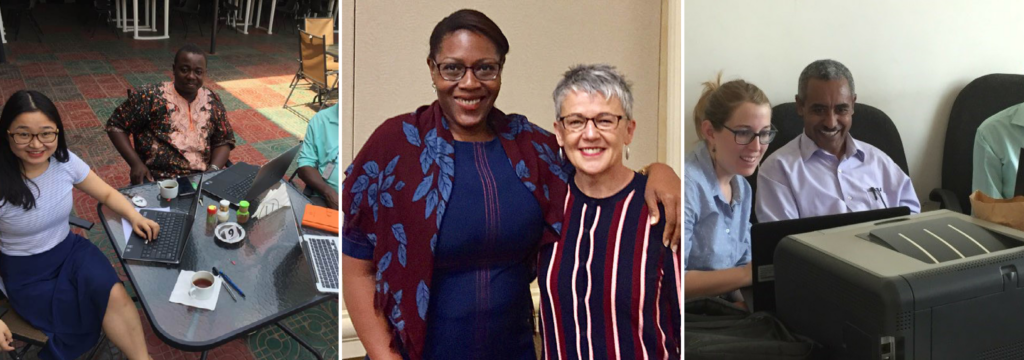
Scientific research produced in Africa often faces barriers to visibility and dissemination, limiting its ability to inform global health debates and influence policy and practice. Strengthening the quality, reach and discoverability of African journals is essential to ensuring that locally generated research can contribute more fully to addressing regional and global health challenges.
The African Journal Partnership Program (AJPP) is an international mentoring initiative supported by the U.S. National Library of Medicine and the National Institutes of Health’s Fogarty International Center and coordinated by the Council of Science Editors. The program pairs African health journals with established journals in the United States and United Kingdom, creating opportunities for knowledge exchange and editorial mentorship.
Through the Elsevier Foundation’s “Research without Borders” initiative, volunteers from Elsevier contributed their expertise to support African journals participating in the AJPP. By sharing knowledge in publishing, editorial processes, technology and strategic development, the partnership aimed to strengthen the capacity of African journals and enhance the global visibility of African health research.
One of the great challenges faced by African research is the lack of effective dissemination both within the African research community and internationally. To boost African health research impact and discoverability, the Elsevier Foundation founded “Research without Borders”, a skills-based volunteering partnership with the African Journal Partnership Program (AJPP), a high-profile mentoring program supported by the US National Library of Medicine and NIH’s Fogarty International Center and administered by the Council of Science Editors. Research without Borders collaborates with AJPP by providing Elsevier volunteer expertise in publishing, marketing, operations, technology and strategic guidance.
What we do
Through Research without Borders, Elsevier volunteers provided hands-on mentoring and training to editorial teams from participating African journals. These engagements typically took place through in-country visits and collaborative workshops, where volunteers worked directly with journal editors and staff. The journals included: African Health Sciences, Annals of African Surgery, Ethiopian Journal of Health Sciences, Ghana Medical Journal, Malawi Medical Journal, Rwanda Journal of Health Sciences, Annales Africaines de Medecine, Mali Medical and The Health Press Zambia.
The mentoring focused on strengthening core aspects of journal publishing, including editorial workflows, peer review processes, digital publishing practices and strategic planning. Volunteers also supported journal teams in improving their discoverability by advising on applications to major scholarly indexing services and strengthening the quality and consistency of journal operations.
In addition, the program encouraged collaboration between African editors and experienced journal leaders from international publications. This exchange of expertise helped strengthen professional networks while supporting the long-term development of African-led scientific publishing.
How we deliver
The initiative was implemented through a combination of volunteer placements, workshops and collaborative learning opportunities. Elsevier staff contributed their professional expertise across areas such as publishing operations, marketing, editorial development and technology.
Training sessions and workshops were organized to support journal editors, authors and reviewers in developing stronger skills in scientific publishing and research communication. These engagements also addressed topics such as improving journal websites, strengthening editorial boards and expanding author and reviewer communities.
By supporting African journals through mentorship and technical guidance, the partnership contributed to strengthening local research ecosystems and improving the dissemination of health research produced on the continent. The collaboration demonstrated how skills-based volunteering can help build sustainable capacity within scholarly publishing while amplifying the global visibility of African science.
