Indoor air pollution, heat health and women in chemistry: Prof. Marian Nkansah’s journey
Indoor air pollution in Kumasi’s school kitchens, and the emerging discipline of Heat Health, are the focus of Prof. Marian Asantewah Nkansah’s latest research. Prof. Nkansah, an environmental chemist at Kwame Nkrumah University of Science and Technology (KNUST) in Kumasi, Ghana, won the 2021 OWSD–Elsevier Foundation Award for Women Scientists. Since then, she’s been elected a Fellow of three international academies, launched a new research direction in Heat Health, and founded a global network for women chemists. We caught up with her on what’s changed and what’s next.
In one or two sentences, what’s the work you’re known for – and who does it help?
I am an environmental chemist known for identifying and characterizing toxic substances – heavy metals, persistent organic pollutants (POPs), polycyclic aromatic hydrocarbons (PAHs), and gaseous pollutants – in everyday matrices such as water, food, soil, air, spices, edible clay, lipstick, and even classroom dust. My work helps protect public health, especially that of women, children, and vulnerable communities, and informs solutions for environmental remediation.
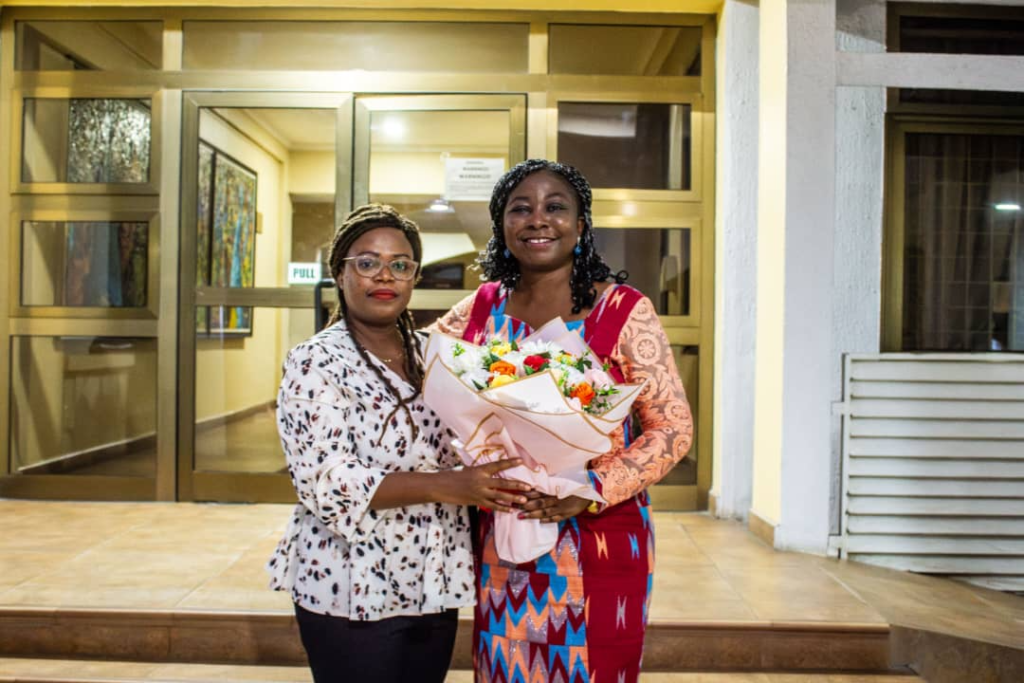
What did winning the OWSD-Elsevier Foundation Award change for you?
Winning the 2021 OWSD-Elsevier Foundation Award for Women Scientists in the Developing World was a huge endorsement of my scientific and professional endeavours. It significantly increased my visibility, credibility, and opportunities for growth and impact – both for my research on environmental contamination and for my commitment to mentorship and outreach to young scientists and girls in science. The visibility has led to additional recognitions including election as a Fellow of the Ghana Academy of Arts and Sciences (GAAS), the International Science Council (ISC) and the World Academy of Art and Science (WAAS).
What are you working on now, and what’s next?
I am currently working on indoor air quality and health risks from traditional cooking fuels. Our recent study in 14 public senior high school kitchens in Kumasi showed pollution levels up to ten times above WHO safe limits, with women kitchen staff most at risk, and we are advocating for cleaner fuels and improved stoves. This study has launched me into the emerging global discipline of Heat Health.
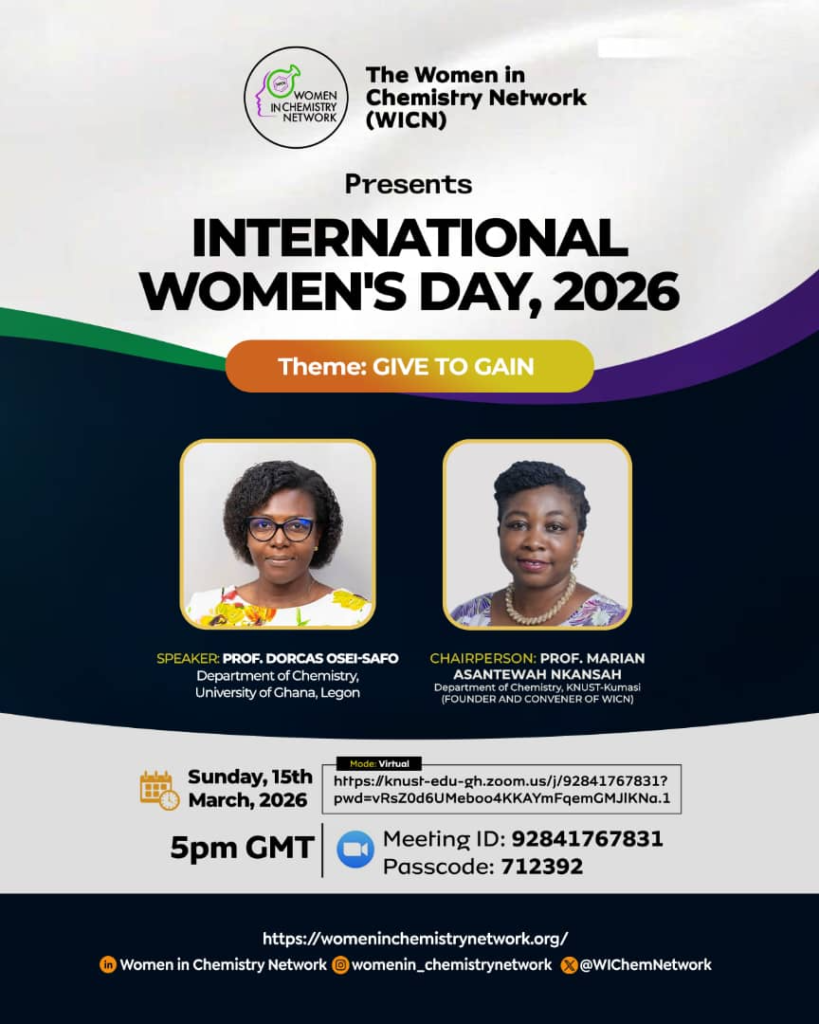
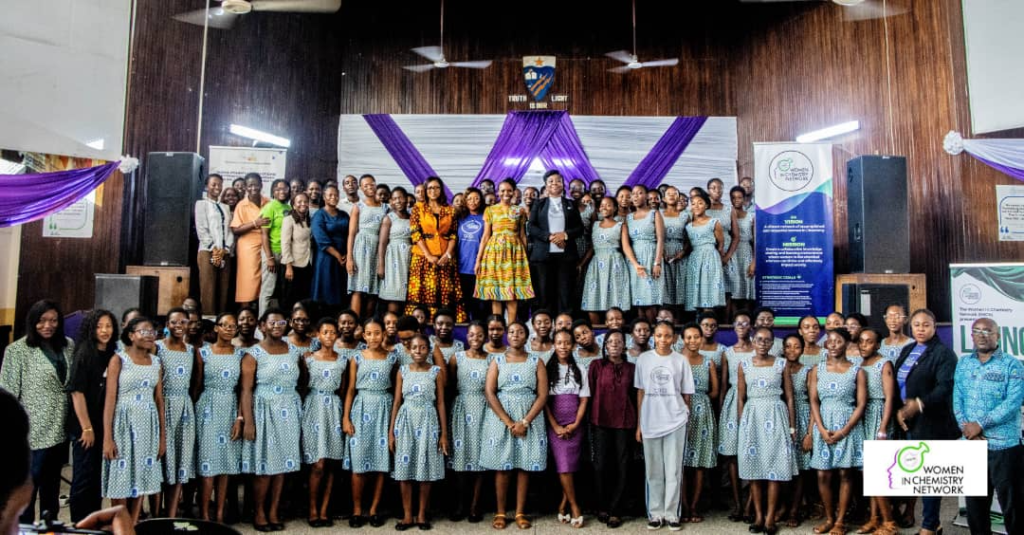
A pivotal moment was when OWSD supported my participation in IUPAC 2023 in The Hague. That experience was the trigger that propelled me to finally establish a global network called Women in Chemistry Network (WICN) – a vision I had nurtured for over a decade – which I founded in 2024 to build the next generation of women scientists.
Next, I am continuing work on low-cost water purification using agricultural waste such as sorbents, widening my frontiers on Heat Health, and expanding WICN’s mentorship and outreach all over the world. I am also part of the German-African Innovation Incentive Award (GAIIA) project on plastic and textile waste conversion schemes between KNUST, Kumasi, Ghana, and the Technical University of Braunschweig, Germany (TUB).
What’s one piece of advice you’d give to a researcher just starting out in your field?
Do not allow negative thoughts from yourself or others, or your ethnicity, location, environment, or gender, to limit what you can achieve. Be curious, be rigorous, document your environment – the most important discoveries are often hidden in plain sight – and always share your knowledge with your community.
Complete this sentence: “Research and health become more inclusive when…”
Research and health become more inclusive when we value local data, include women and communities from developing countries as producers of knowledge and not just subjects or consumers, and translate science into public awareness and policy that protects everyone – from the market matriarch to the school child.
—
Five years on from her award, Prof. Nkansah’s work has moved from characterizing pollutants to founding the institutions that will carry that work forward — WICN now stands as her own answer to the mentorship gap she once navigated alone. It’s a reminder that an early-career recognition can compound: into new fields of study, new fellowships, and new networks built for the scientists coming next.
Prof. Marian Asantewah Nkansah is a Professor at the Department of Chemistry of the Kwame Nkrumah University of Science and Technology (KNUST), Kumasi, where she obtained her BSc. and MSc. degrees. She holds a PhD in Environmental Chemistry from the University of Bergen-Norway. Her research spans a wide range of fields including finding solutions to environmental problems associated with levels and fate of toxic substances like heavy/trace metals, persistent organic pollutants (POPs) and polycyclic aromatic hydrocarbons (PAHs) in different environmental matrices. She also explores remediation strategies for contaminates.
Prof. Nkansah has received training in Science Diplomacy and Science Advice for Policy. She has been on both national and international platforms where science is discussed for better public understanding. She is a thought leader and motivational speaker. Prof. Nkansah is the founder of the Women in Chemistry Network (WICN), a member of the Ghana Chemical Society (GCS) and Royal Society of Chemistry (RSC), member of the American Chemical Society (ACS), Affiliate of the International Union of Pure and Applied Chemistry (IUPAC) and member of the Ghana Science Association (GSA) among other organisations.
She is an alumna of the Global Young Academy (GYA), an affiliate of both the World Academy of Sciences (TWAS) and the African Academy of Sciences (AAS), fellow of the Next Einstein’s Forum (NEF), member of the Intergovernmental Panel on Climate Change (IPCC) as well as member of the steering committee of the International Decade of Science for Sustainable Development (IDSSD). Prof. Nkansah is a fellow of the World Academy of Art and Science (WAAS), fellow of the International Science Council (ISC)) and Fellow of the Ghana Academy of Arts and Sciences (GAAS).
She is a former Warden of the Africa Hall of residence at KNUST and currently the Director of Students Affairs of the same institution. She is a member of the Women in STEM Ghana group and is committed to the mentorship of younger students in their pursuit of STEM fields, and serves as mentor and role model for many. She enjoys teaching, storytelling, travelling and hiking.