Dr. Dênis Pires de Lima: Turning cashew nut waste into sustainable materials for cultural heritage
Dr. Dênis Pires de Lima has spent the past decade transforming cashew nut shell liquid (CNSL) – an abundant agro-industrial waste product – into sustainable materials, from mosquito-borne disease control to the conservation of historical and cultural heritage. He’s the first alumnus featured in our new Alumni Spotlight series, where we check back in with past Elsevier Foundation partners and prize winners to see where their work has taken them.
In 2017, Dr. Pires de Lima won the Elsevier Foundation-ISC3 Green and Sustainable Chemistry Challenge for “From Cashews to Castor Oil, Combating Mosquito-Borne Diseases,” turning cashew and castor oil waste into environmentally friendly insecticides against Zika- and Dengue-carrying mosquitoes. We spoke with him in our 5th anniversary interview about the award’s impact – now, six years on, we caught up again to hear how his sustainable chemistry research has evolved.
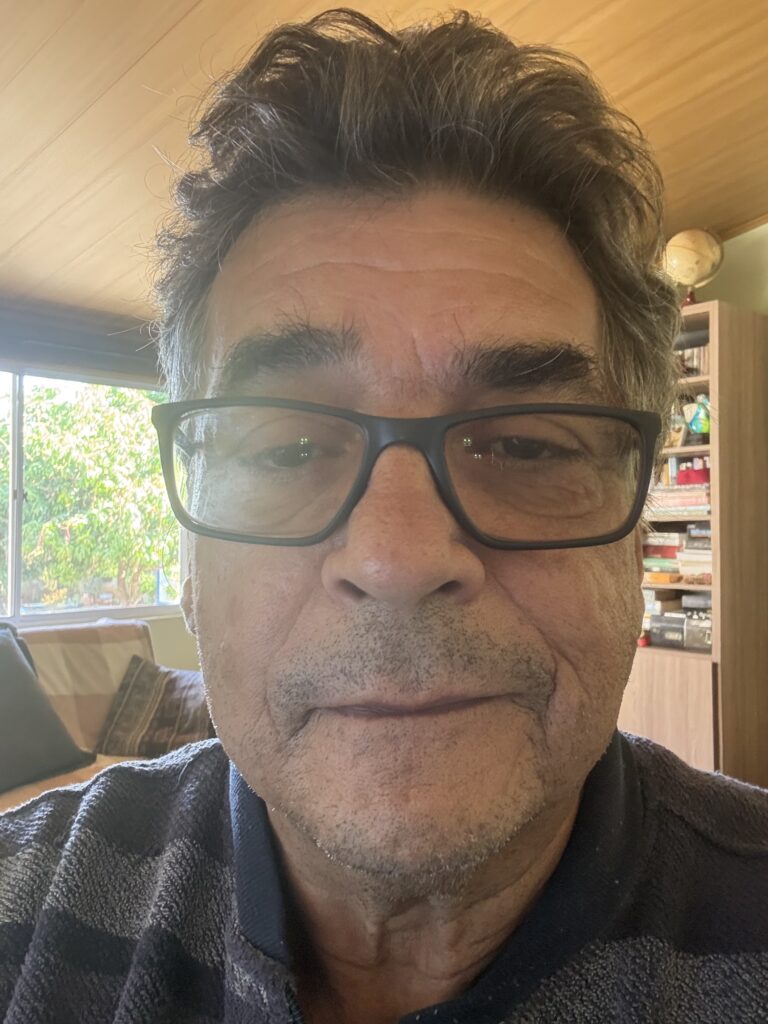
In one or two sentences, what’s the work you’re known for – and who does it help?
My work has explored how the chemistry of natural products can be transformed into new knowledge and useful materials. More recently, I have focused on cashew nut shell liquid, an abundant agro-industrial residue, and its potential to generate sustainable materials for applications ranging from environmental challenges to the conservation and recovery of historical and cultural heritage.
What did winning the Chemistry Challenge change for you?
Winning the Chemistry Challenge in 2018 gave international visibility to research being developed in Brazil and was a meaningful recognition of the value of pursuing scientific questions in our own context. More than a moment of recognition, it encouraged me to continue exploring how chemistry can generate knowledge and applications with broader environmental, social and cultural relevance.
What are you working on now, and what’s next?
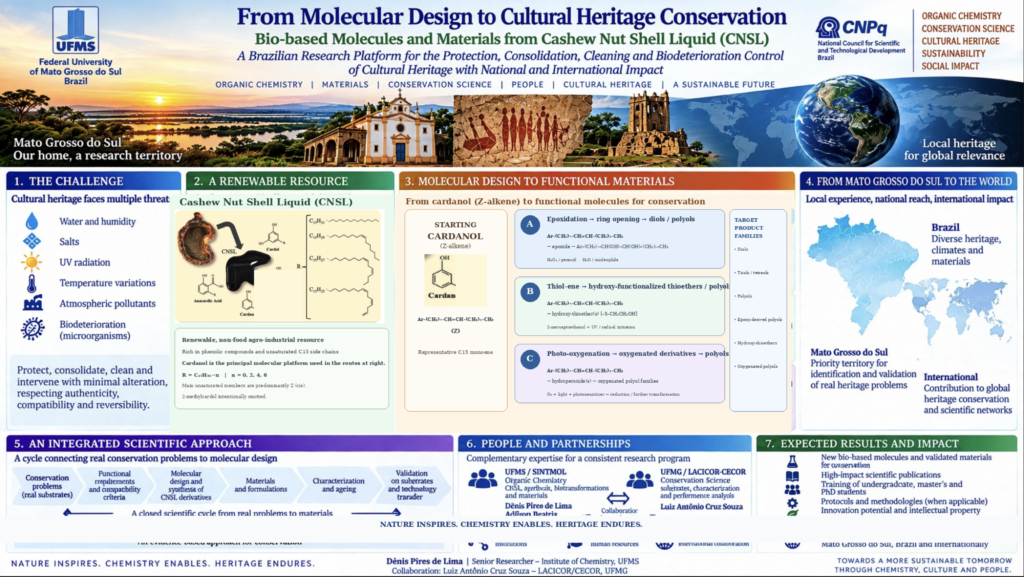
I am now taking my research on cashew nut shell liquid in a new direction: transforming an abundant agro-industrial residue into sustainable, multifunctional materials. We are investigating their potential for the conservation, preservation and recovery of historical and cultural heritage, including protection against water and microorganisms. For me, this is an exciting example of how fundamental chemistry can evolve over time into solutions that connect environmental sustainability, materials science and the preservation of our cultural memory.
What’s one piece of advice you’d give to a researcher or innovator just starting out in your field?
Do not be afraid to follow a question simply because it does not fit neatly into an established research path. Some of the most interesting discoveries come from connecting fields that are usually kept apart, and from having the patience to let a scientific question evolve into an unexpected application.
“Research and health become more inclusive when…”
Research and health become more inclusive when scientific opportunities are not limited by geography or by the resources available to a country, and when knowledge generated in different parts of the world is valued for the solutions it can offer to local and global challenges.
—
From mosquito-borne disease to the preservation of cultural heritage, Dr. Pires de Lima’s work is a reminder that the most valuable research often travels furthest when it’s allowed to evolve. We’re grateful he’s stayed part of the Foundation community, and we look forward to seeing where cashew nut shell liquid takes him next.
The Elsevier Foundation alumni have important stories of impact to share. Stay tuned, this is only the first of many.
Dr. Dênis Pires de Lima holds a degree in Pharmacy from the Federal University of Minas Gerais (UFMG) and a PhD from UFMG, including a CNPq-funded sandwich fellowship at the Department of Chemistry of the University of Alberta, Canada. He completed a postdoctoral fellowship at the Department of Chemistry of the University of Liverpool, UK, supported by CAPES. He is a retired Full Professor and Senior Researcher at the Federal University of Mato Grosso do Sul (UFMS).His research experience is in Organic Chemistry, with a focus on the preparation of bioactive compounds. He has supervised research on the synthesis of naphthoquinones, and flavonoids, for biological activity studies, in collaboration with national and international researchers.More recently, has turned his research focus to cashew nut shell liquid (CNSL), an abundant agro-industrial residue, investigating its potential to generate sustainable materials. These applications range from addressing environmental challenges to the conservation and recovery of historical and cultural heritage.