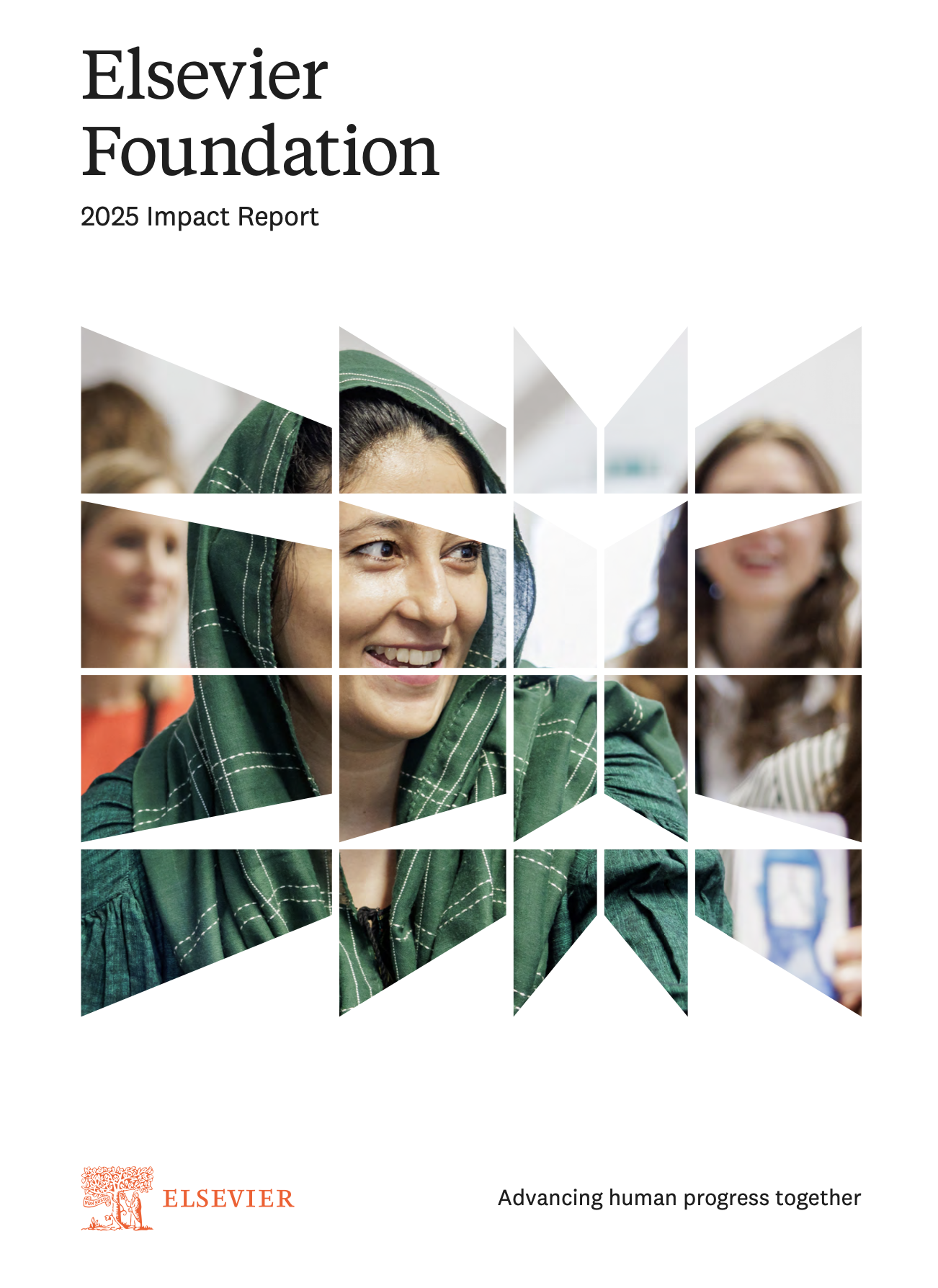
New impact report: supporting inclusive research and health
In a laboratory in Jordan, a scientist experiments with an unlikely ingredient: parsley. Her goal: to remove toxic metals from wastewater and help communities facing chronic water scarcity. Thousands of miles away in Bhutan, a young researcher logs into Research4Life, gaining access to global knowledge that would otherwise be out of reach. In Germany, a research team is rethinking how we understand women’s health – using new, non-invasive approaches to detect disease earlier and improve outcomes across a lifetime.
These stories are part of a broader global shift: today, researchers in low- and middle-income countries (LMICs) contribute nearly 60% of global research output, up from just 13% three decades ago. This transformation reflects sustained investment in local research systems – and an opportunity to strengthen inclusive, high-impact science where it matters most.
For more than two decades, the Elsevier Foundation has worked alongside partners to support over 200 partnerships with more than $19 million in funding – helping researchers build the skills, networks and visibility needed not only to participate in global science, but to lead it.
Whether it is climate-smart agriculture in Uganda, improved maternal health outcomes, or new approaches to disease detection, we know that solutions are most effective when they are rooted in local knowledge and driven by inclusive collaboration.
And as the research landscape becomes increasingly global and multipolar, the need for inclusive, evidence-based systems has never been greater.
Read the full 2025 Elsevier Foundation Impact Report and explore the stories, partnerships and data driving this progress – and see how inclusive research and health are shaping a more resilient future for communities worldwide.

